Hide messageView More

Recursos en Español

Para encontrar recursos de ASERT que han sido traducidos al español, haga clic aquí.
To find ASERT resources that have been translated into Spanish, click here.

Quick links: MyODP ASDNext AidInPA PhillyAP

Be Safe: Treatment for Sexual Abuse and Assault Social Story, Parts 1-4

Overview

These resources, part of the Be Safe resource collection, are a series of social stories that explain the different types of treatment that are available for individuals with autism who have experienced sexual abuse or assault. Treatment options include Cognitive Behavior Therapy (CBT), Narrative Exposure Therapy (NET) and Eye Movement Desensitization and Reprocessing (EMDR).
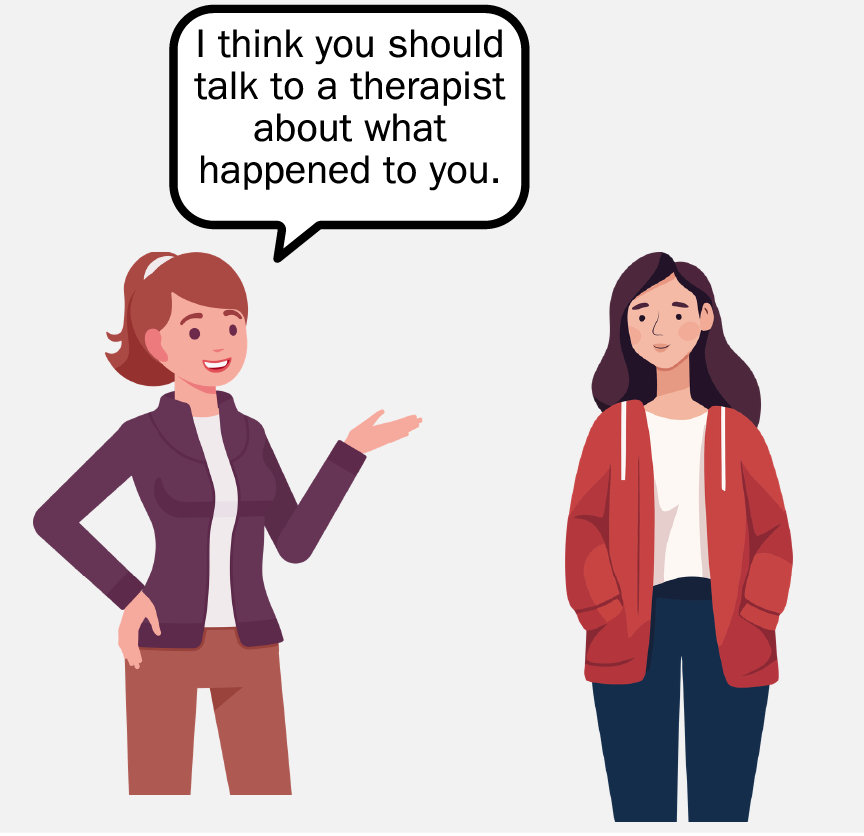
Part 1: Basic Therapy

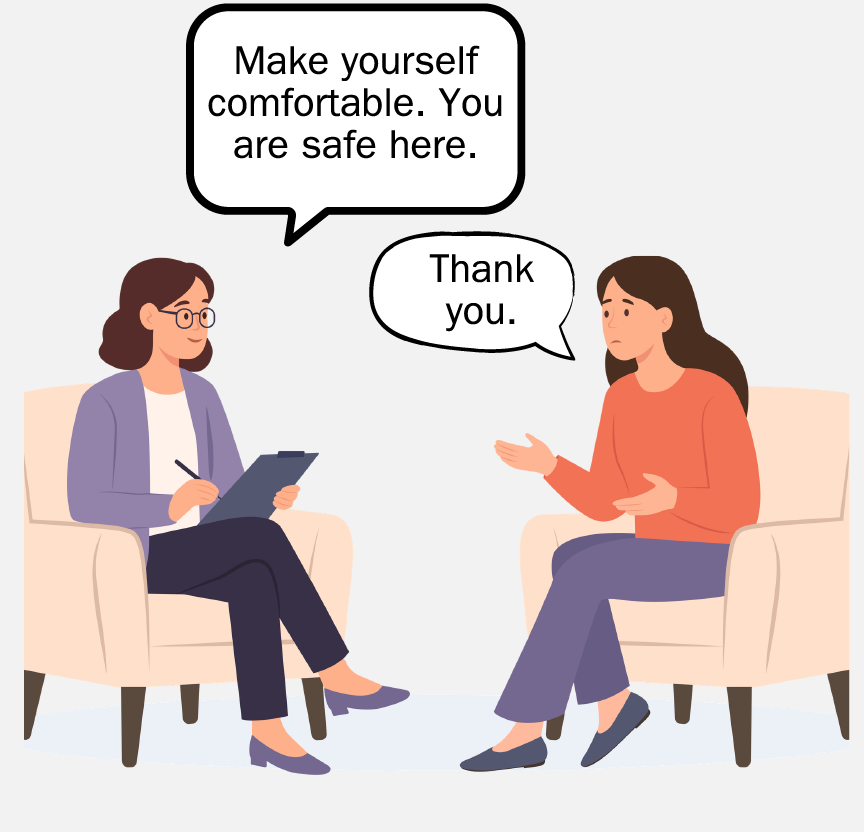
A woman saying,

If bad things have happened to me, I might be asked to talk with a therapist.

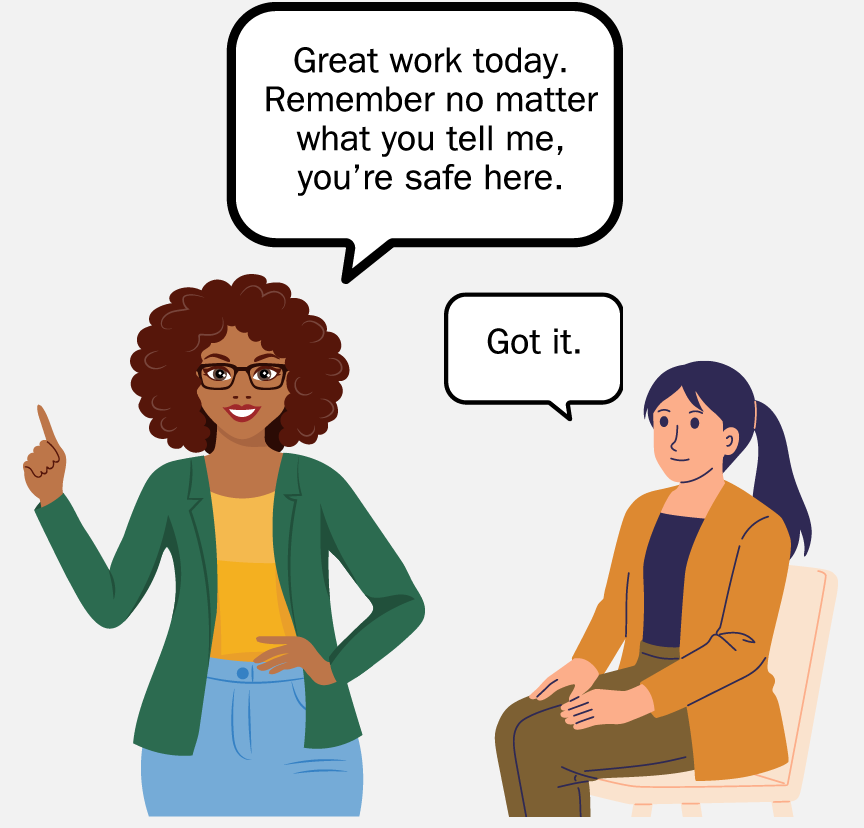
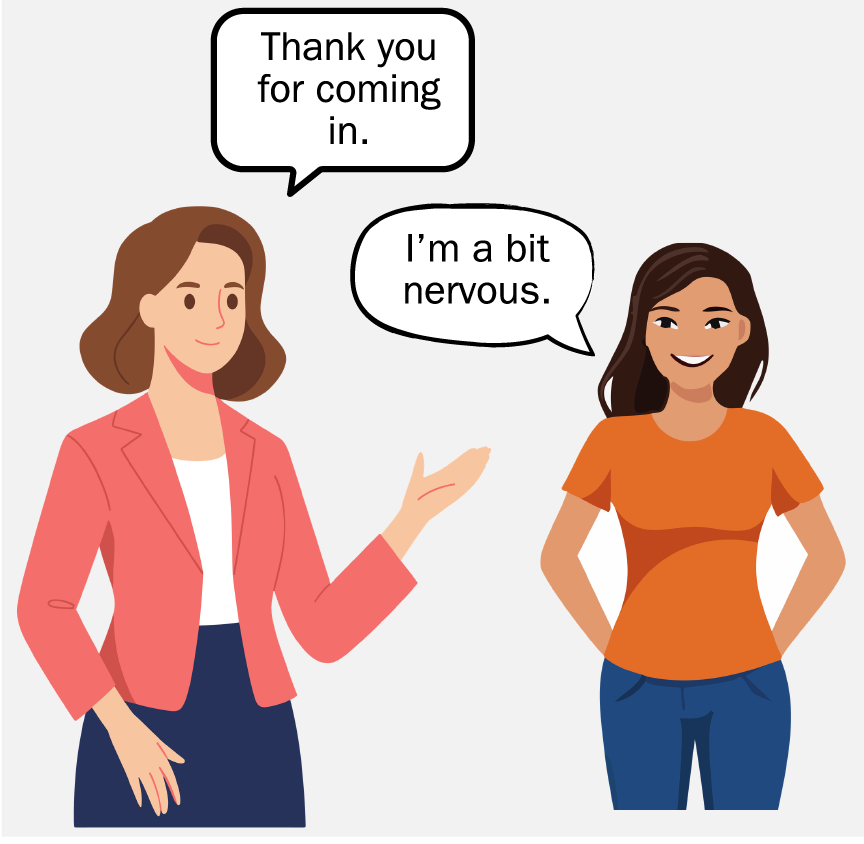
A woman saying thank you for coming in to another woman. The other woman responds with,

Talking about what happened can be really hard.

A therapist saying,

The therapist will try to help me feel safe and calm.

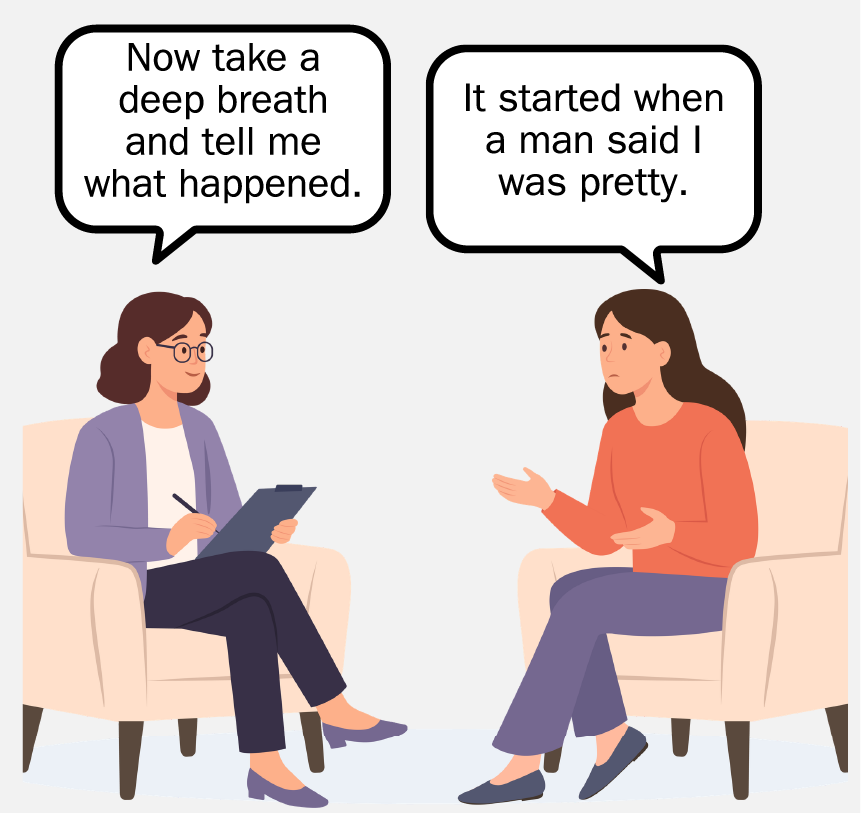
A therapist saying

The therapist might help me practice talking about the bad stuff that happened.

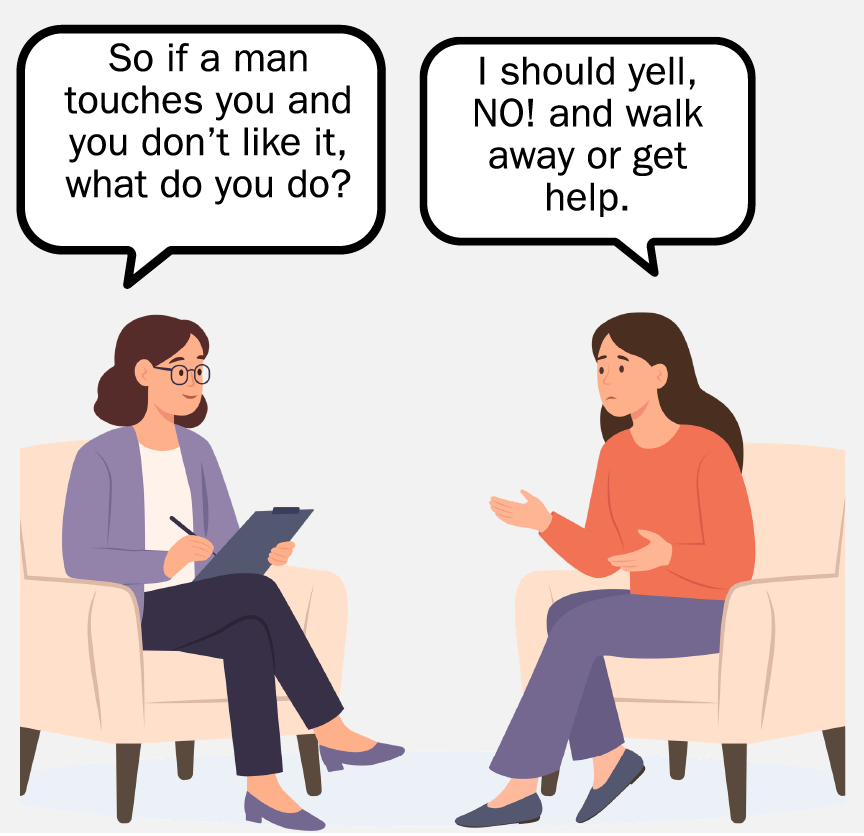
A therapist saying,

The therapist might help me practice things that are scary.

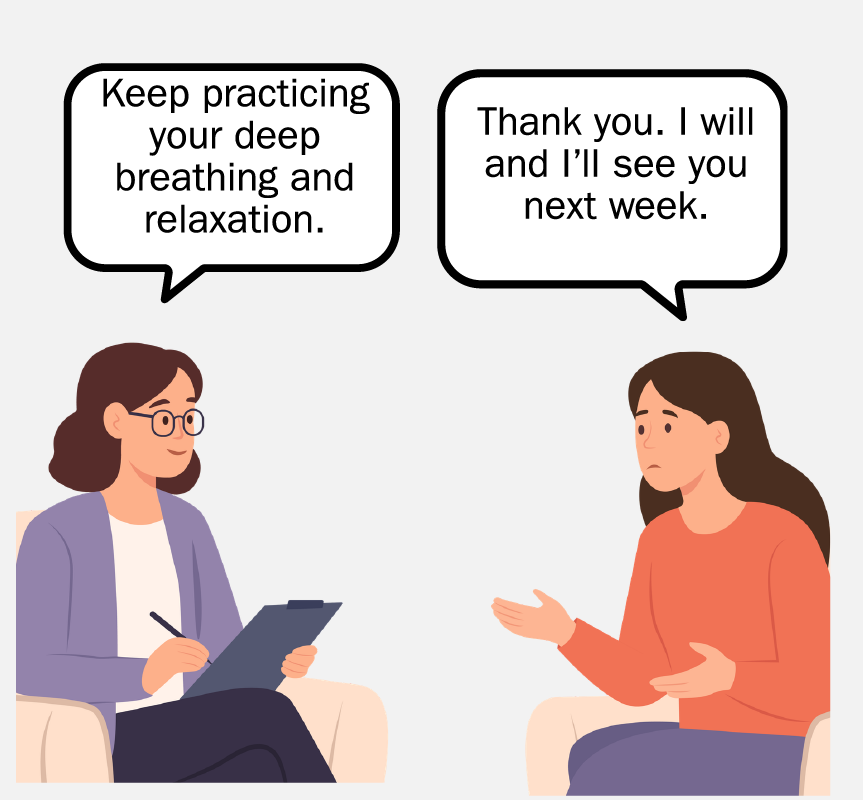
A therapist saying,

I will probably see the therapist every week to practice feeling safe and calm.

Page 1 of 6
Page 1 of 6

Part 2: Cognitive Behavior Therapy

Two men standing across from each other and talking.

If something bad has happened to me, I might be asked to talk with a therapist.

A man saying,

When I see the therapist, I should try my best to say how I am feeling.

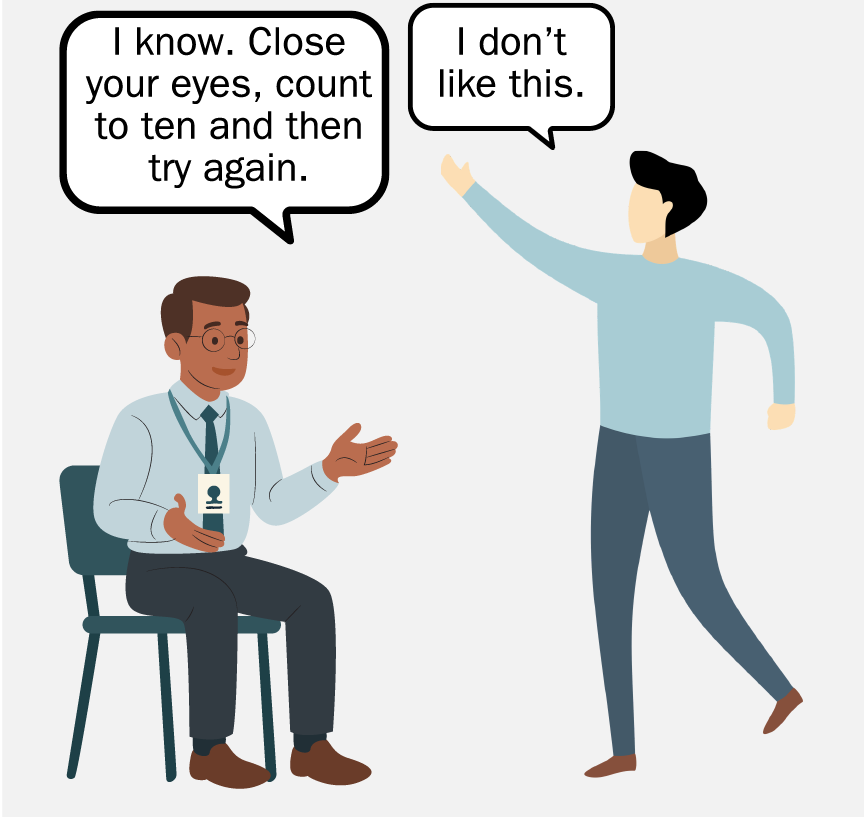
A therapist asking,

Sometimes the therapist will ask me to talk about what I'm thinking.

A therapist saying,

The therapist will try to help me think about stuff in a new way.

A therapist saying,

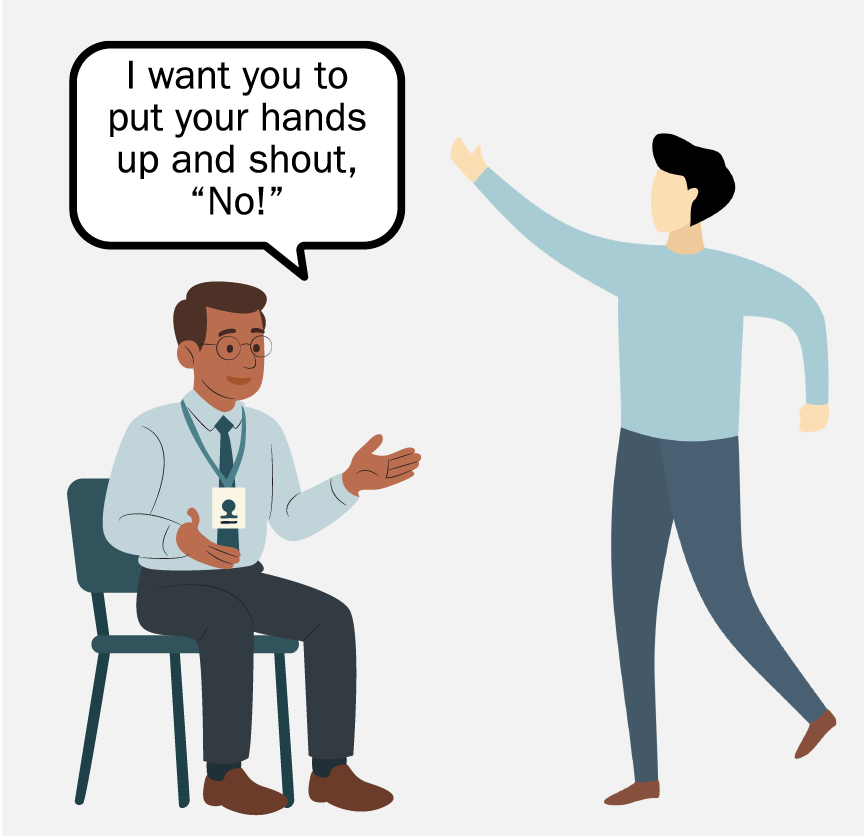
The therapist might ask me to do things that are a little scary.

A man standing with his arms up and saying,

To help me do this, the therapist will also teach me ways to feel calm and safe.

Page 1 of 6
Page 1 of 6

Part 3: Eye Movement Desensitization and Reprocessing (EMDR)

Two people standing across from each other. The woman on the left is covering her face with her hands.

If something bad has happened to me, I might be asked to talk with a therapist.

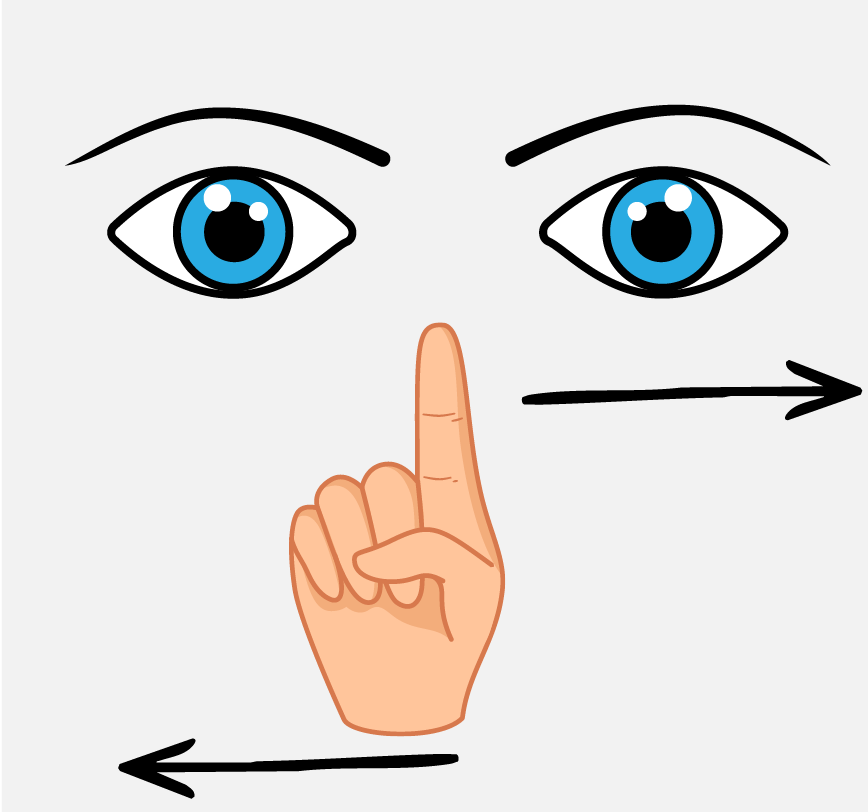
A pair of eyes, a pointed finger and two arrows. This is to represent eyes following whichever direction the finger is moving in.

Sometimes the therapist might have me watch something go back and forth.

A woman wearing headphones. There are music notes above her and an image of earth behind her.

Sometimes the therapist might have me listen to sounds.

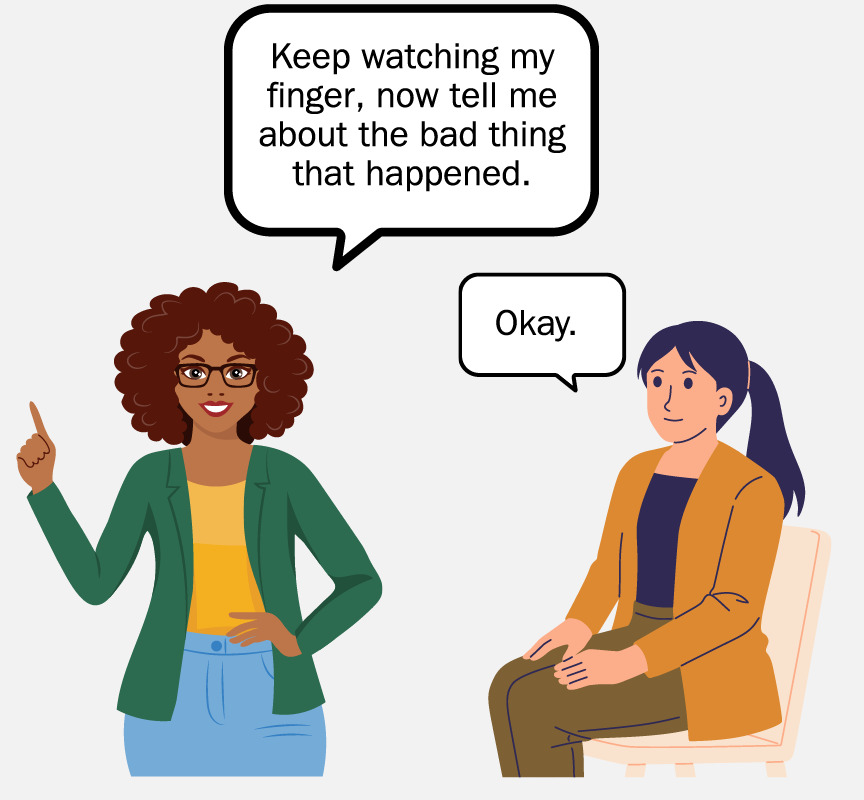
A therapist pointing her finger and saying,

While things go back and forth, the therapist will ask me to think about the bad things that happened.

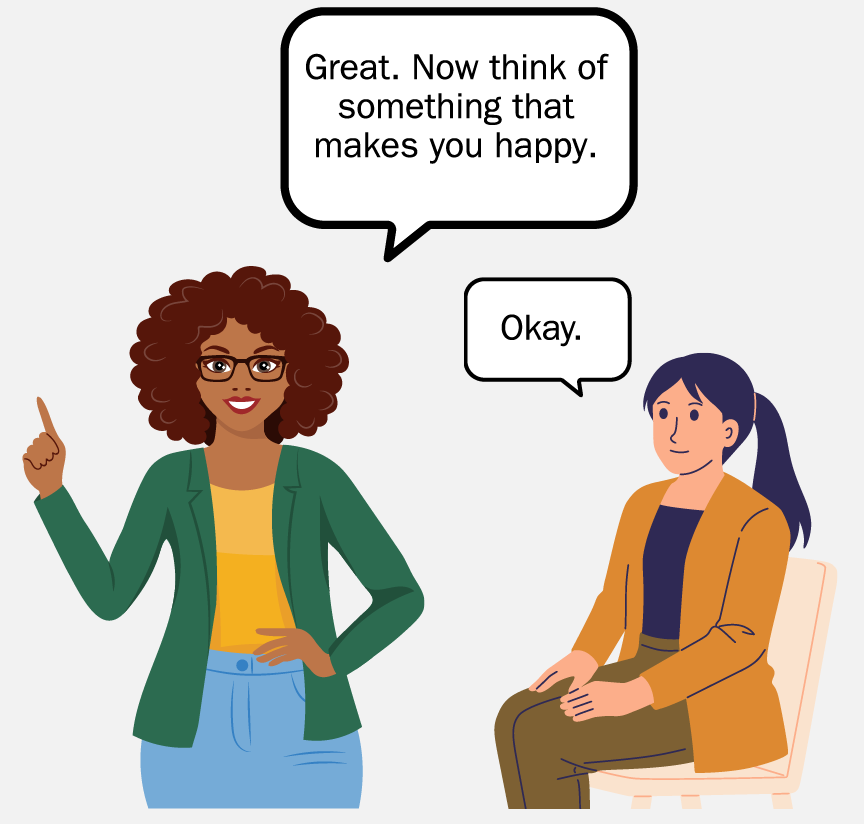
A Therapist pointing her finger and saying,

Other times, the therapist will ask me to think about good things.

A Therapist pointing her finger and saying,

When I am with the therapist, I should remember that I am in a safe place.

Page 1 of 6
Page 1 of 6

Part 4: Narrative Therapy (NET)

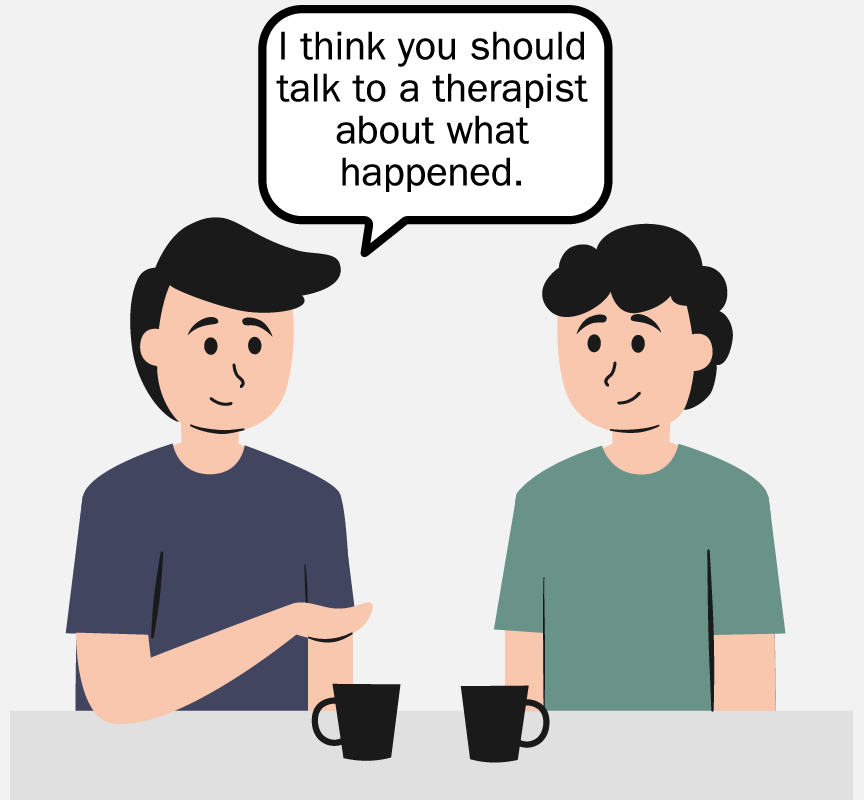
Two men having coffee together. The one on the left is saying,

If bad things have happened to me, I might be asked to talk with a therapist.

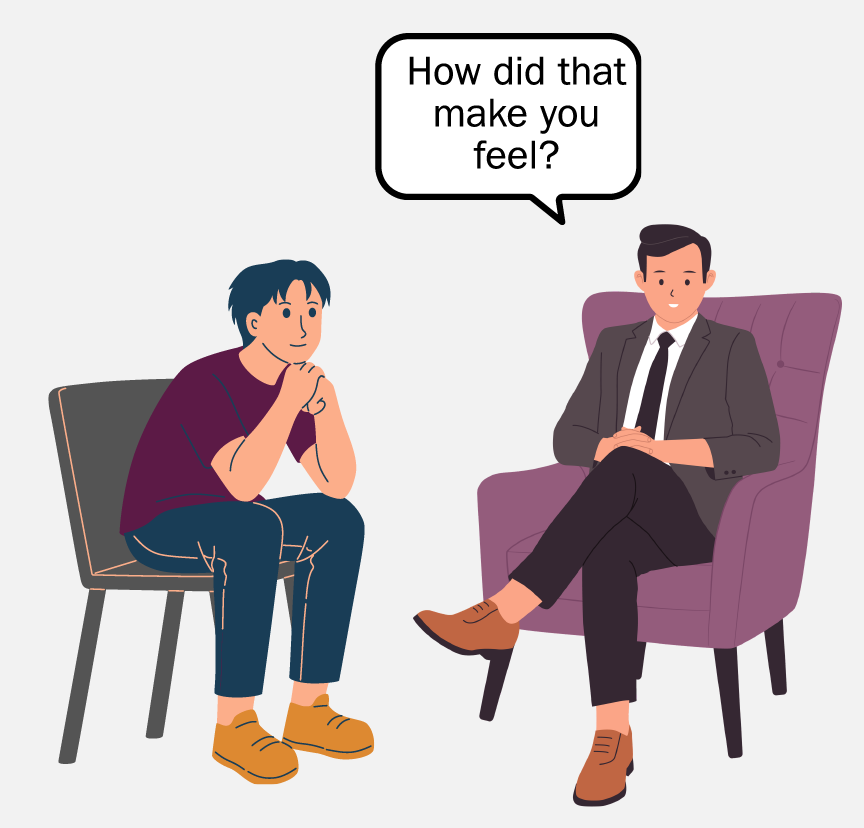
A therapist saying,

Sometimes the therapist will ask me about how I was feeling.

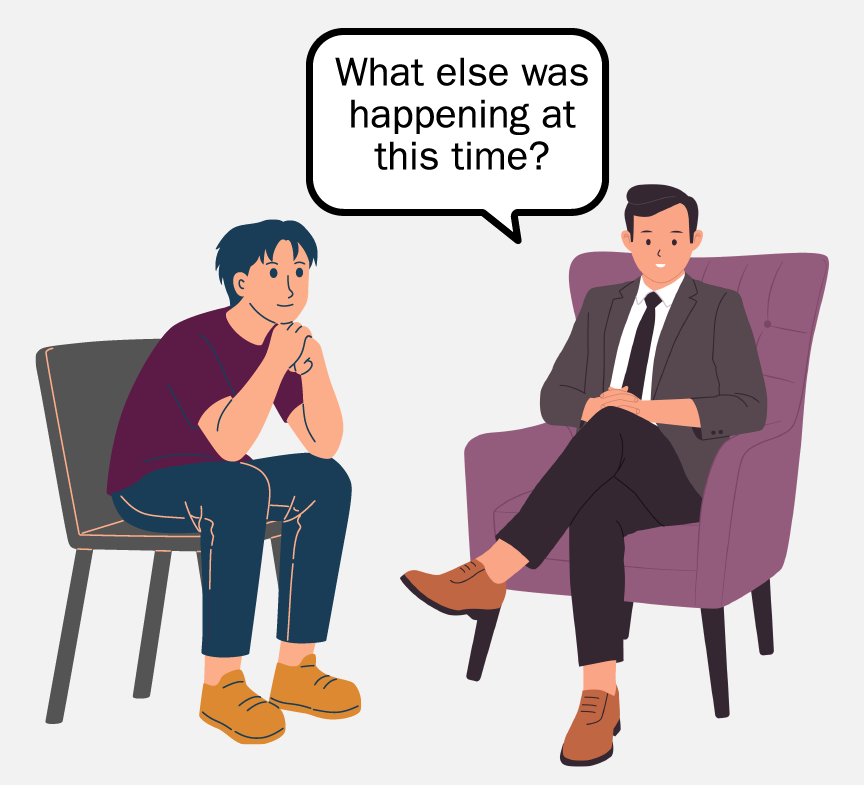
A therapist asking,

Sometimes the therapist will ask me about what else was happening around me.

A therapist saying,

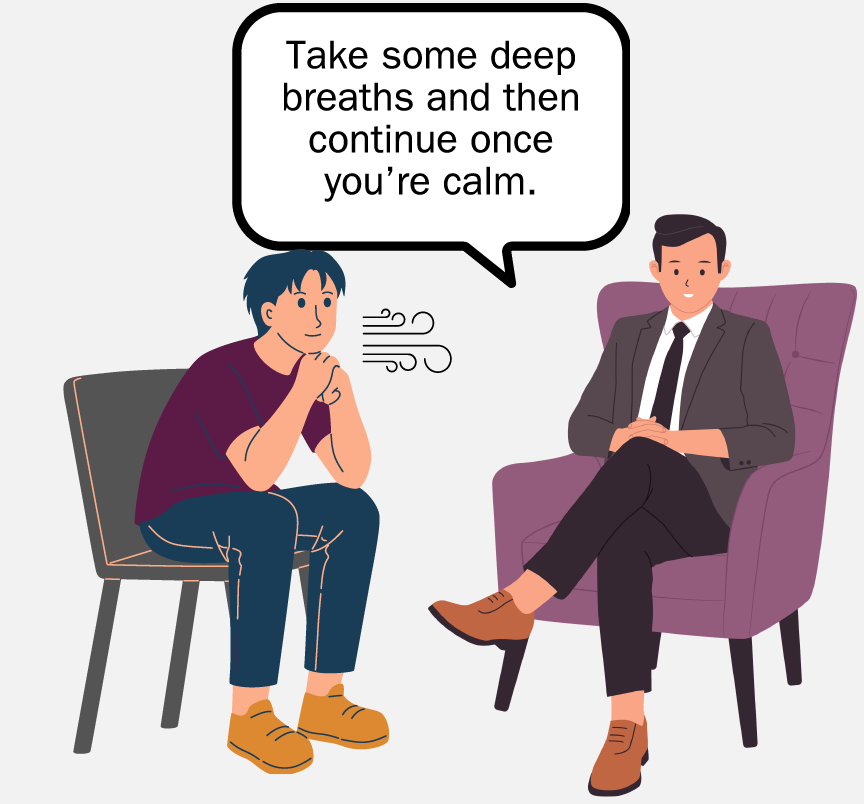
The therapist might ask me to practice being calm while talking about the bad things.

A therapist asking,

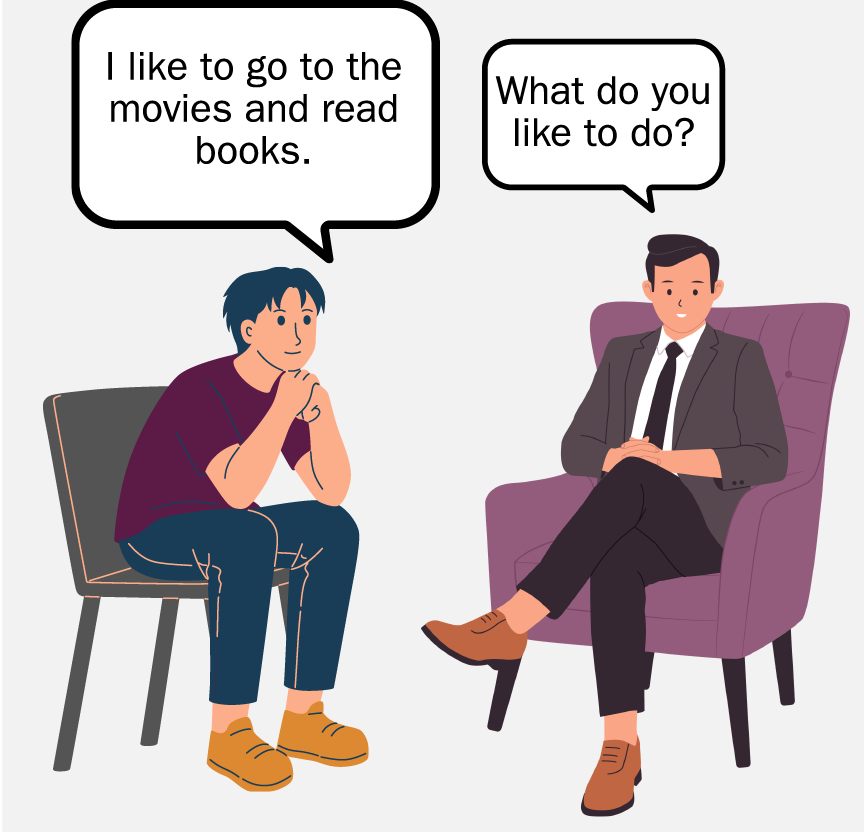
The therapist might ask about other stuff in my life.

A therapist asking,

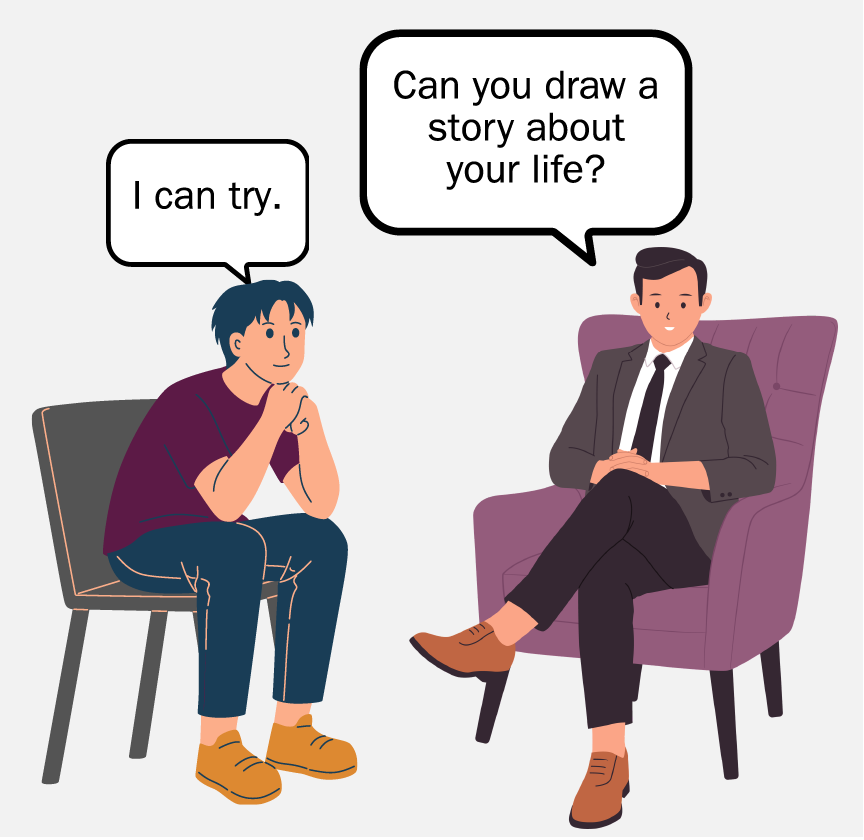
At the end, the therapist might ask me to make a story about my life.

Page 1 of 6
Page 1 of 6

Rate this resource

Average rating:

Thank you for rating this resource!

Other downloads

Name Description Type File
Part 1 Basic Therapy pdf Download file: Part 1
Part 2 Cognitive Behavior Therapy pdf Download file: Part 2
Part 3 Eye Movement Desensitization and Reprocessing (EMDR) pdf Download file: Part 3
Part 4 Narrative Therapy (NET) pdf Download file: Part 4

This information was developed by the Autism Services, Education, Resources, and Training Collaborative (ASERT). For more information, please contact ASERT at 877-231-4244 or info@PAautism.org. ASERT is funded by the Bureau of Supports for Autism and Special Populations, PA Department of Human Services.