Hide messageView More

Recursos en Español

Para encontrar recursos de ASERT que han sido traducidos al español, haga clic aquí.
To find ASERT resources that have been translated into Spanish, click here.


Quick links: MyODP ASDNext AidInPA PhillyAP

Daylight Saving Time

Two arrows in a circle with 2x in the center.

In many places, clocks change two times each year. This is called daylight saving time.

A colorful fall tree and a bird sitting on a branch of a spring tree.

One change happens in the spring. The other change happens in the fall.

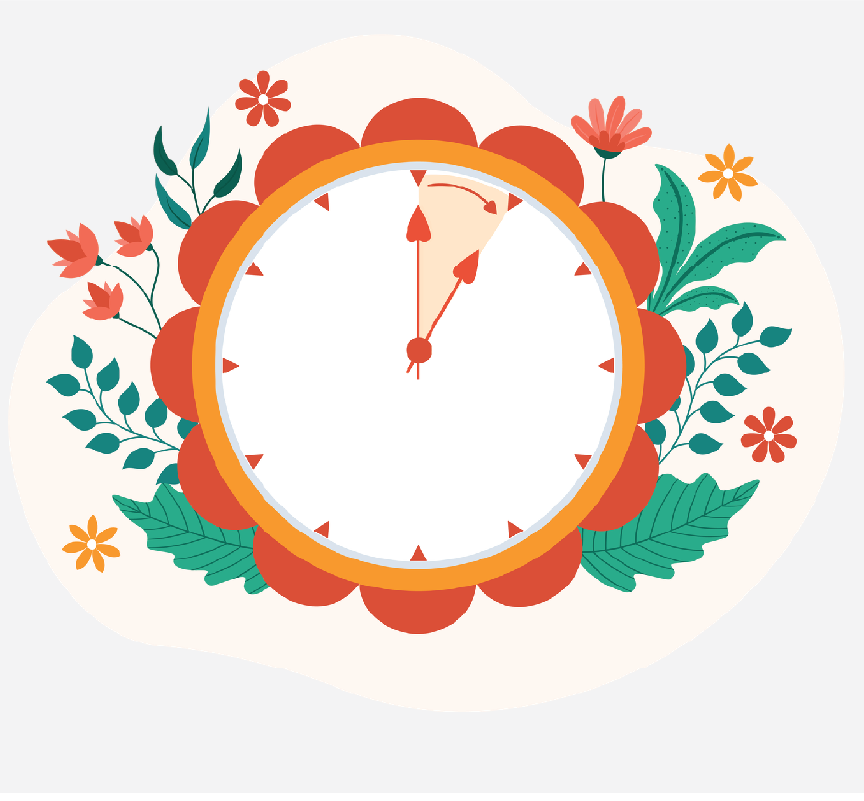
A clock with flowers around it. The hour between 12 and 1 is highlighted and has an arrow going in clockwise direction.

In spring, clocks move forward by one hour. I may get one less hour of sleep that night.

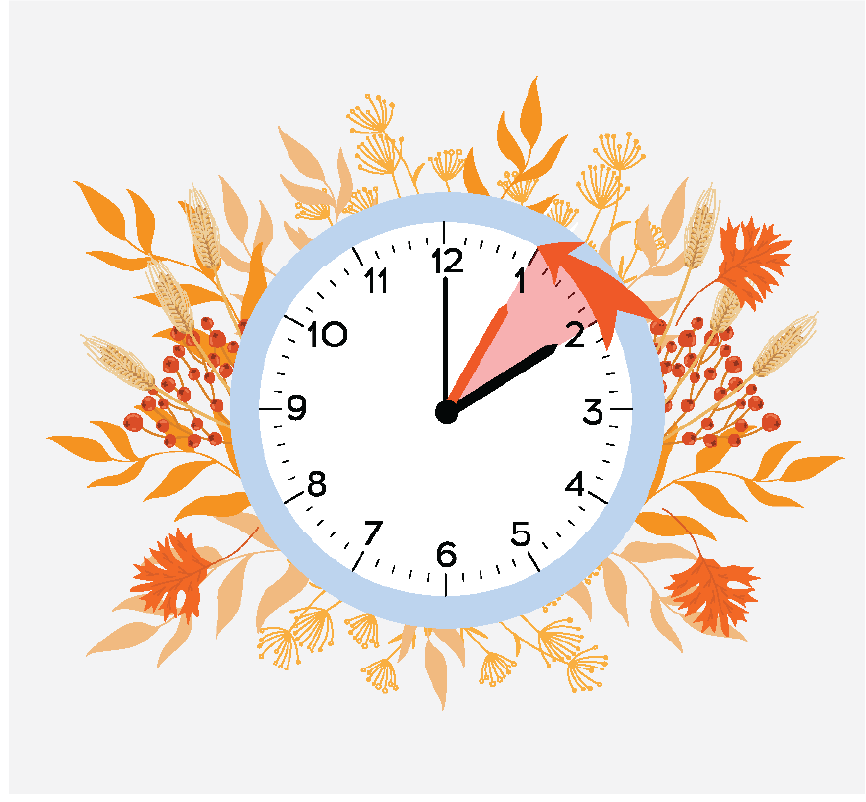
A clock with fall leaves around it. The hour between 1 and 2 is highlighted and has an arrow going in counterclockwise direction.

In fall, clocks move back by one hour. I may get one extra hour of sleep that night.

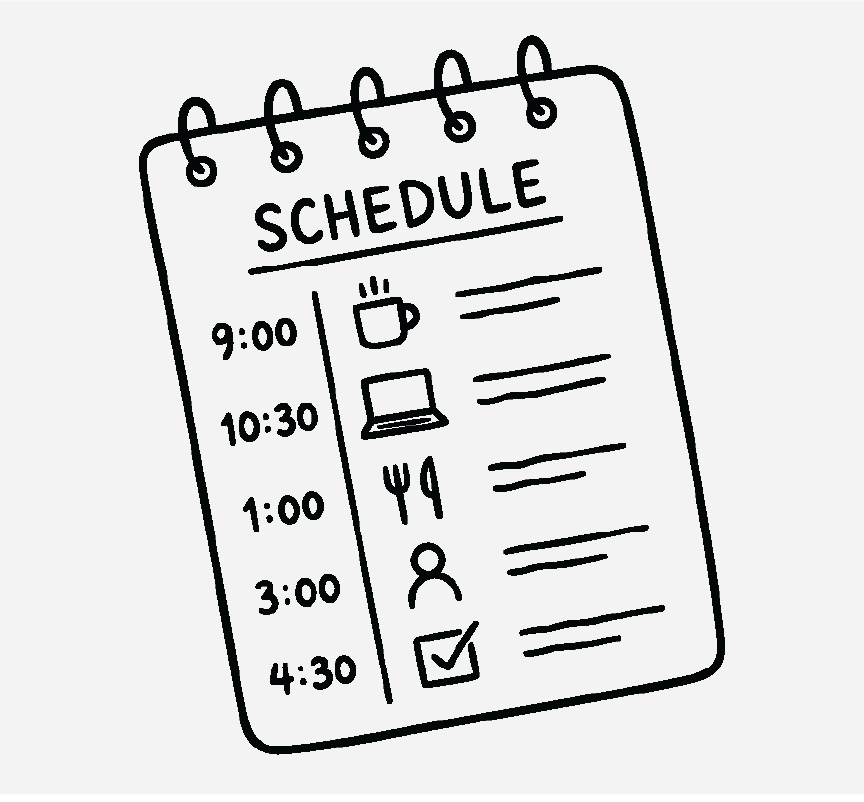
A schedule from 9 to 4:30 with pictures on it.

The clock changes, but the day still continues. My routines and activities are still there.

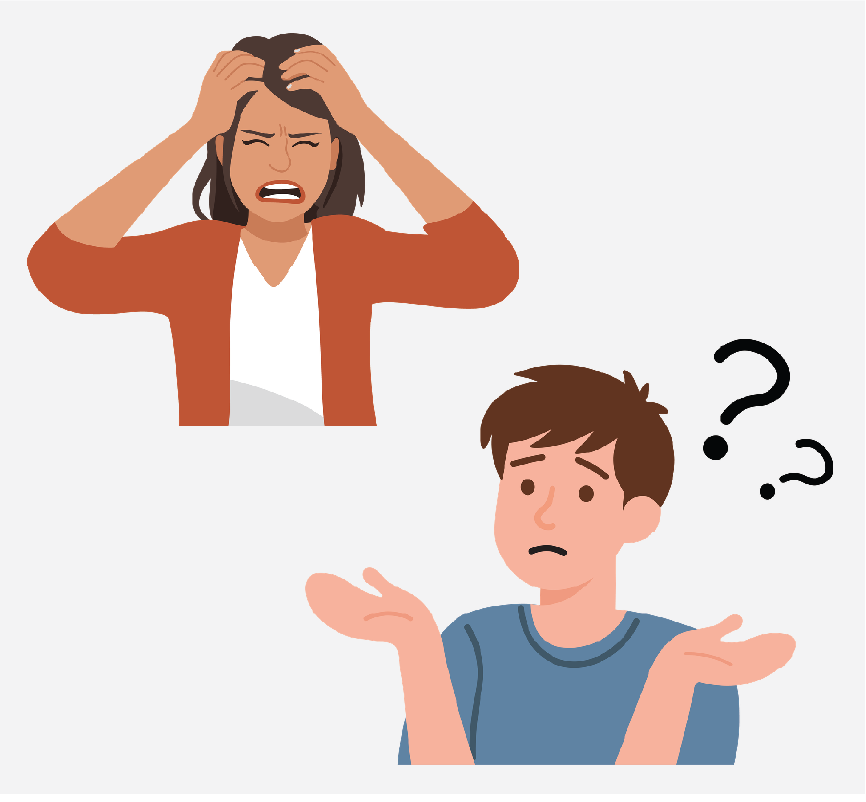
A confused woman with her hands on her head and a confused man with question marks around him.

I may feel tired, confused, worried, or frustrated. These feelings are okay. Many people need time to adjust.

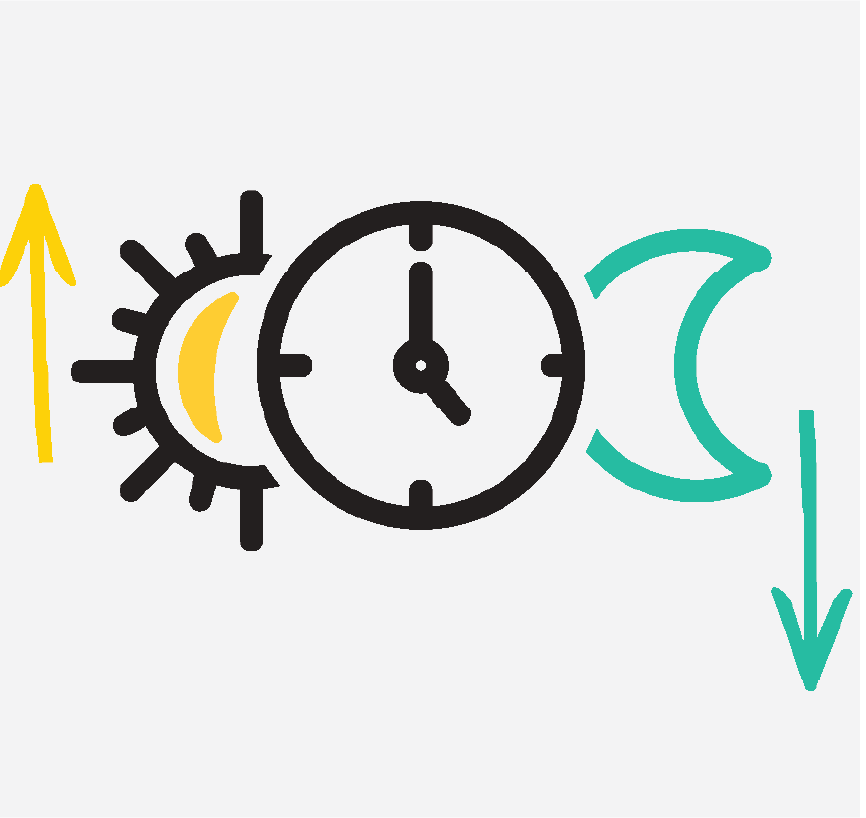
A clock in the center with a half of a sun and an arrow pointing up on the left and half of a moon and an arrow pointing down on the right. This is to represent daylight savings time.

The time change will make the sun rise and set at a different time.

A girl sleeping with her head on a pillow by a window with the moon outside.

I may go to bed when it is still light or wake up when it is still dark.

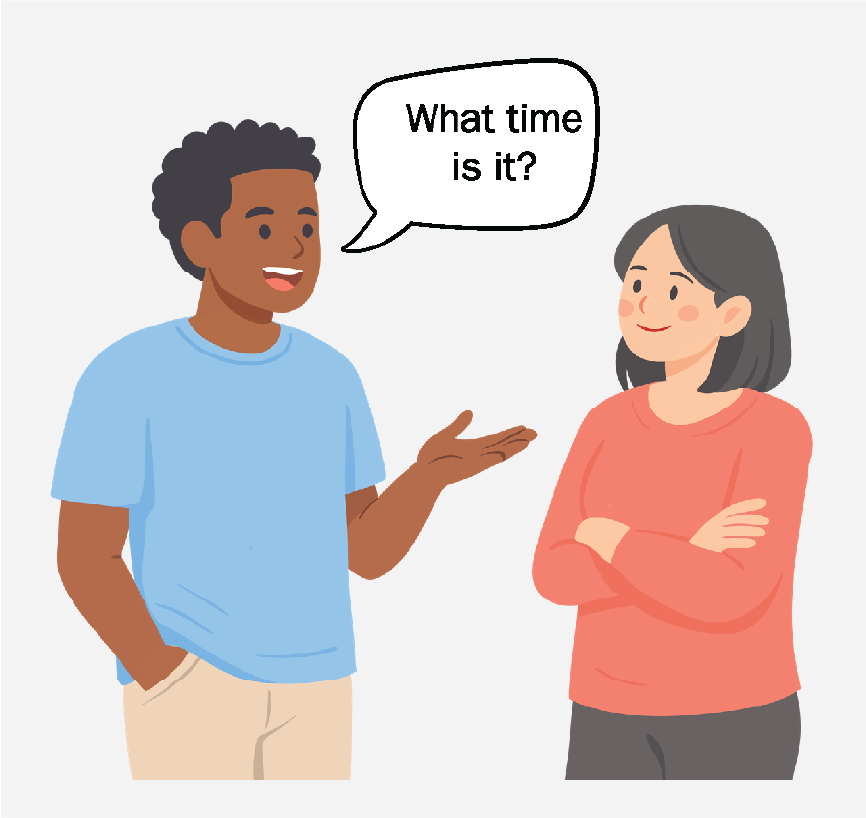
A man asking a woman,

If I am unsure about the time, I can ask someone I trust.

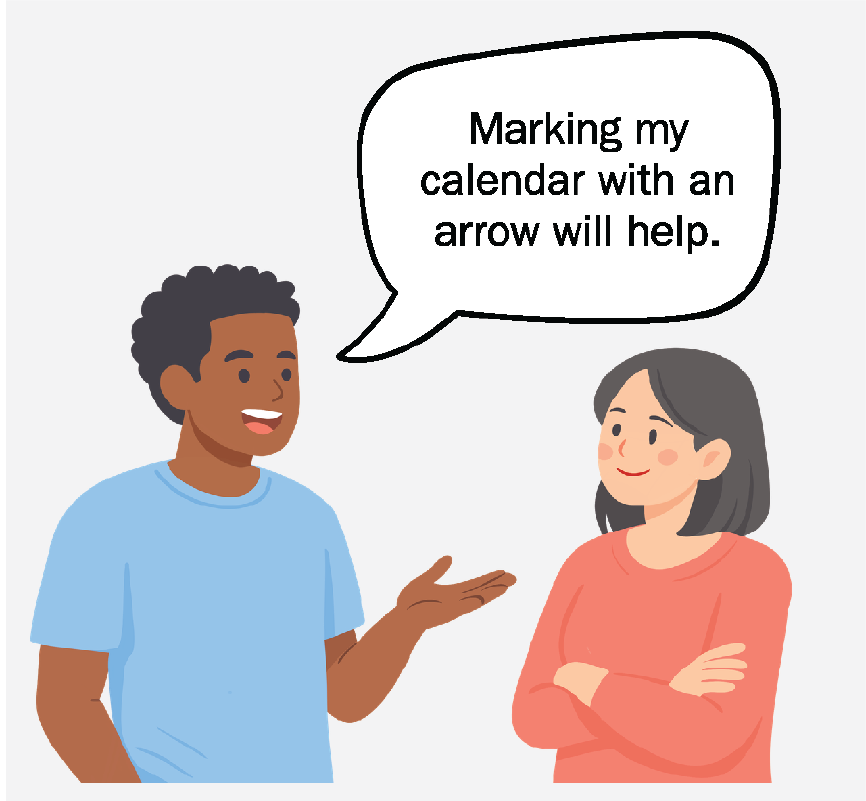
A man saying,

I can tell others what kind of support would help me.

A young man sleeping in a comfy chair.

I need to be patient with myself while I adjust.

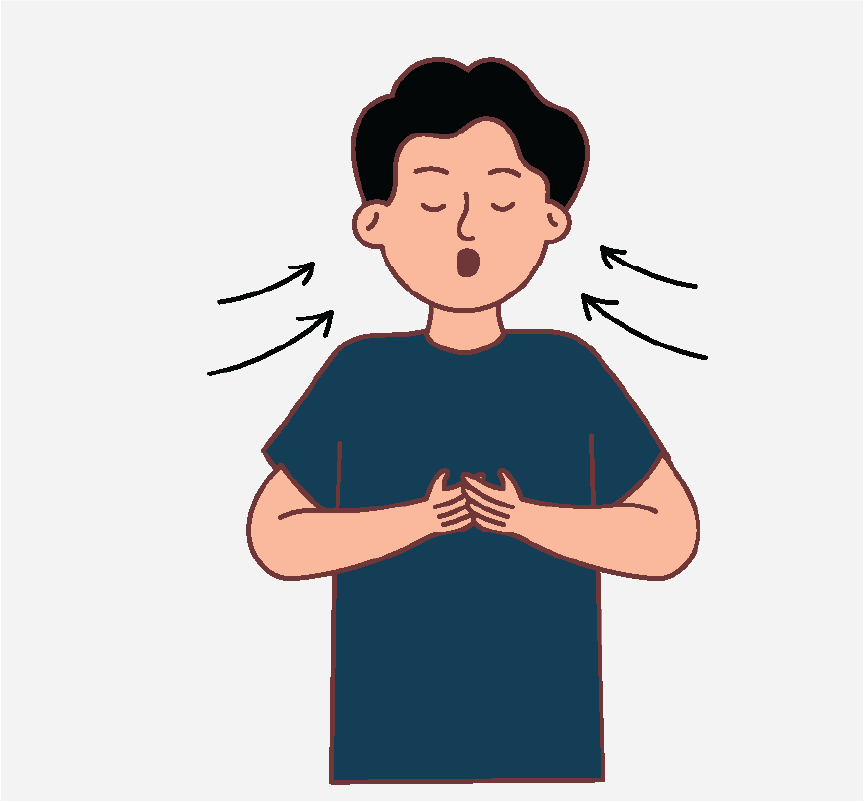
A man taking deep breaths to calm himself.

I can care for myself by taking a break or using a calming tool.

Page 1 of 12
Page 1 of 12

Rate this resource

Thank you for rating this resource!

Download entire resource (pdf)

This information was developed by the Autism Services, Education, Resources, and Training Collaborative (ASERT). For more information, please contact ASERT at 877-231-4244 or info@PAautism.org. ASERT is funded by the Bureau of Supports for Autism and Special Populations, PA Department of Human Services.